A top 10 Google ranking was about 1.8 times more likely to disappear entirely from the first 100 search results during Google's August 2026 spam update than during a normal week, according to SE Ranking data reported by Search Engine Land. If your traffic or rankings shifted in the past two weeks and you have no idea why, this is very likely the reason, not something you broke.
What's the Difference Between a Spam Update and a Core Update?
Google ran its third spam update of 2026 between August 18 and August 21, targeting the same categories it always targets: cloaking, doorway pages, hidden text, mass-generated low-quality content, and keyword stuffing. This is an upgrade to SpamBrain, Google's automated spam detection system, not a new rulebook, and Google added no new spam policy categories with this release. It also confirmed, notably, that this particular update did not target link spam or the site reputation abuse policy, which have their own separate enforcement tracks.
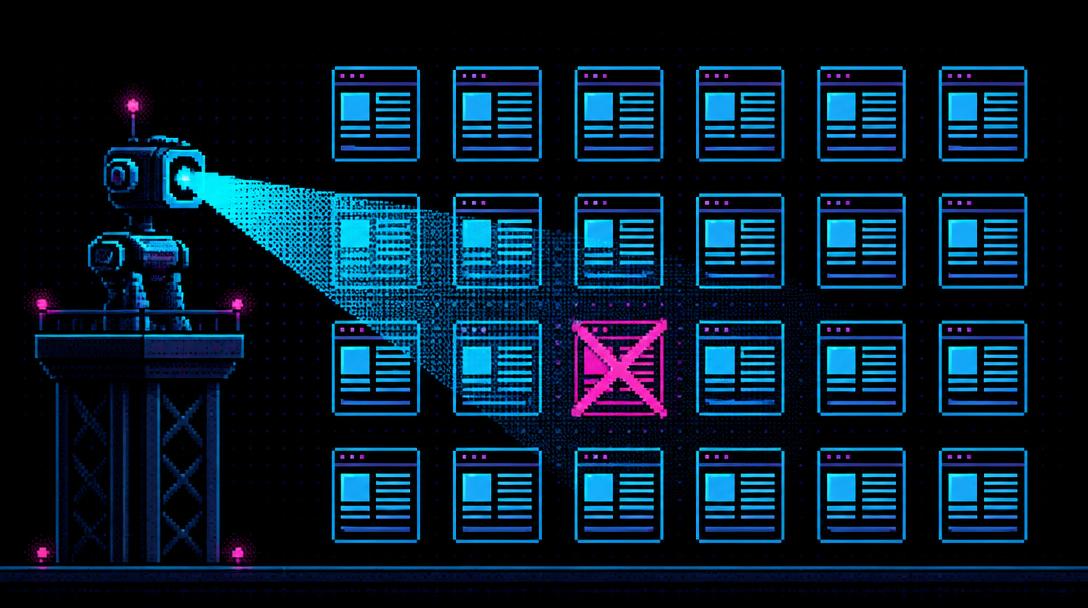
That distinction matters because a spam update and a core update aren't the same thing, even though both cause ranking movement. A core update reassesses overall content quality and relevance broadly. A spam update is narrower and more mechanical: it improves how well Google's systems catch sites already violating specific, named policies. A ranking drop from a spam update usually points to one identifiable problem, which is actually good news if it happens to you, because it's a more findable issue than a core update's broader quality reassessment.
How Disruptive Was the August 2026 Update, Really?
This update was measurably more disruptive than ordinary week-to-week ranking churn, not just anecdotally, but in tracked data. SE Ranking's analysis, covering 100,000 U.S. keywords across 20 industries, found that 16.71% of URLs ranking in the top 10 fell beyond position 100 for the same keyword during the update window, compared to 9.2% during a baseline period with no confirmed update, meaning a top 10 ranking was significantly more likely to collapse entirely than during normal search movement. It wasn't purely a punishment pass, either: 12% more URLs jumped into the top 3 post-update that hadn't even cracked the top 20 before, so plenty of pages moved up as others fell.
Every one of the 20 industries SE Ranking tracked saw volatility, ranging from 74.64% in real estate to 85.55% in fashion and beauty. Real estate and healthcare, both categories Google treats with extra scrutiny under its Your Money or Your Life standards, were relatively the steadiest of the twenty, though "steadiest" here still means real movement, not immunity.
One honest caveat worth stating plainly: SE Ranking didn't run a page-level or site-level analysis of what specifically got hit or why. This is aggregate volatility data, not a root-cause report. Nobody, including SE Ranking, has published data showing which tactics were disproportionately affected in this specific rollout.
What This Means If You're Not an SEO Professional
A spam update targets a specific, narrow set of violations, so a ranking shift alone doesn't mean your site did anything wrong. If you're not running templated doorway pages, hidden text, keyword stuffing, or mass-produced AI content with no unique value, this update most likely wasn't punishing you directly, even if broader volatility touched your rankings indirectly. Grand Strand real estate and healthcare sites saw relatively less movement than most categories in the SE Ranking data, which tracks with Google historically applying tighter scrutiny to Your Money or Your Life content even outside a confirmed update, a pattern worth knowing if you run a practice or brokerage site here and want to understand why your volatility looked different from a restaurant or retail competitor's.
If you have worked with a vendor who scaled location pages, generated bulk AI content, or used any tactic that sounds like what SpamBrain targets, this is exactly the kind of update that would surface that problem. Local visibility built on real signals holds up far better through updates like this one, which is the whole argument in Google Business Profile Optimization for Myrtle Beach Businesses, and it's the approach behind our Local SEO & GBP work.
Recovery from a confirmed policy violation isn't immediate, either. Google has previously said reassessment after fixes can take months, not days, so a quick edit and a prayer isn't a real remediation plan.
FAQ: My Rankings Dropped After August 2026. Was It This Update?
Timing is the first clue: if the drop happened between August 18 and August 21, 2026, or in the days immediately after as Google's systems continued to settle, this update is a reasonable first suspect. The second clue is whether your site matches what this update targets: cloaking, doorway pages, hidden or stuffed text, or content that was mass-produced with minimal unique value per page. If none of that applies, the drop may be unrelated: normal ranking volatility, a separate technical issue, or a change made by a competitor rather than a penalty against your own site. Checking Google Search Console for manual actions and reviewing your site against Google's published spam policies directly is the most reliable way to confirm which situation you're in.
The Takeaway
Spam updates are more targeted than they feel from the outside, and more disruptive than day-to-day ranking churn when they hit. If you got caught in this one and you know why, the fix is specific and findable. If you got caught in it and have no idea why, the update itself isn't going to tell you. A real audit against Google's actual spam policies will.
Sources
Written by Scott Patrick Humphrey, Founder, Get Lifted Agency. Last reviewed August 2026.
Get Lifted Agency audits Myrtle Beach and Grand Strand websites against Google's actual spam policies, not guesswork. Let's talk.